
English| EUR
Suggested for you
More currencies
Choose a language
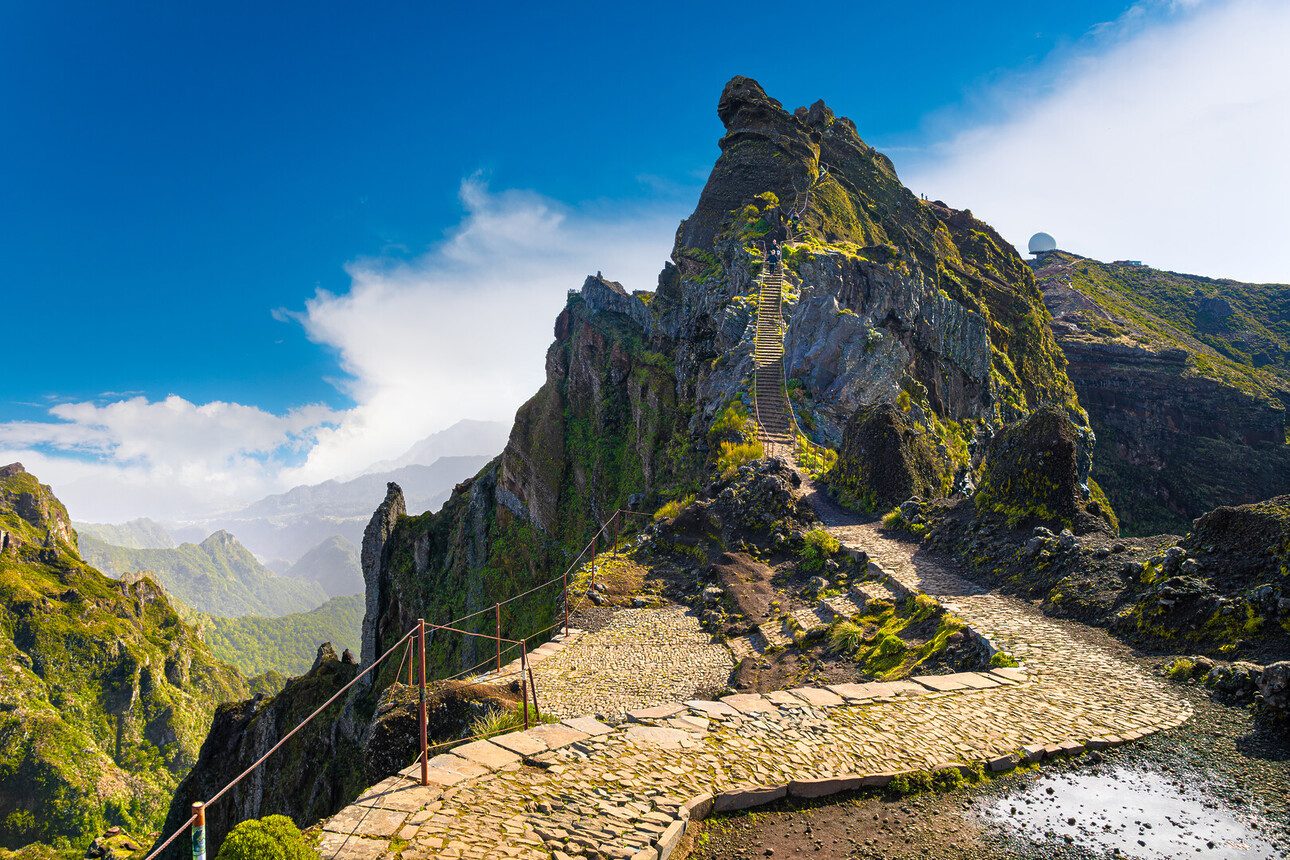
At 1,818 meters above sea level, Pico do Arieiro sits well above Madeira's coastal weather zones. The summit experiences a mountain microclimate where temperatures drop sharply, wind accelerates, and conditions shift within minutes—understanding the thermal range before you arrive is not optional.
Quick answer
Pico do Arieiro temperature typically ranges from 5°C to 15°C during daylight hours, with summer peaks reaching 20°C to 25°C in calm conditions and winter lows dropping to -5°C when factoring in wind chill. Early morning arrivals between 06:00 and 08:00—the recommended window for sunrise viewing—often register 3°C to 8°C, even in July and August. Above the cloud line, radiant heat from direct sun can raise perceived temperature by 10°C within an hour of dawn.
The summit of Pico do Arieiro records an average annual temperature of 10°C, but that figure collapses the moment you account for diurnal variation and elevation-driven wind exposure. A July afternoon at the parking area may feel temperate at 22°C, while a January pre-dawn arrival can deliver sub-zero readings amplified by gusts that exceed 60 kilometers per hour. The mountain's position above the inversion layer means it frequently pierces the cloud deck that blankets Madeira's central massif, exposing hikers to unfiltered solar radiation and rapid convective cooling in equal measure. Summer months from June through September bring the warmest conditions, with midday highs on calm days reaching 20°C to 25°C and overnight lows stabilizing around 8°C to 12°C. Winter—December through February—drops the daytime range to 5°C to 10°C, with night and early morning temperatures falling to 0°C or below when Atlantic low-pressure systems sweep across the island. Spring and autumn occupy a transitional band: March through May and October through November see daytime averages of 12°C to 16°C, but the weather becomes less predictable as frontal systems migrate, and a morning that begins in fog at 6°C can clear to brilliant sun and 18°C by 10:00. Wind chill is the variable that transforms a manageable temperature into a survival consideration. Exposed ridgelines funnel prevailing northeasterly winds, and the effective temperature can drop by 5°C to 10°C compared to sheltered zones near the viewpoint café. Humidity also plays a role: when clouds envelop the summit, moisture condenses on skin and fabric, accelerating heat loss even when the thermometer reads a mild 12°C. The interplay of altitude, exposure, and maritime influence creates a microclimate that demands layered preparation rather than a single jacket. The free-access policy at Pico do Arieiro—open daily from 00:00 to 23:59 with no entrance fee—means hikers arrive at all hours, but those targeting the 06:00 to 08:00 window for sunrise face the coldest conditions of the day. Thermal baseline starts low, wind speed peaks in the pre-dawn hours, and the absence of solar gain means your body relies entirely on insulation. Once the sun crests the eastern ridge, radiant warming is immediate and intense, and by mid-morning the same summit that felt glacial at dawn can prompt hikers to strip layers. Understanding the thermal arc of a summit day turns clothing from guesswork into calibrated response.
“Wind chill is the variable that transforms a manageable temperature into a survival consideration.”
The best arrival window is 06:00–08:00, which allows hikers to experience cooler temperatures before the midday sun intensifies and avoids peak parking congestion. High-altitude weather shifts quickly, making early starts essential for stable conditions.
15°C to 22°C, clear skies
Dry conditions dominate but early arrivals are essential to avoid heat.
5°C to 12°C, frequent wind
Temperatures drop significantly, requiring layering even on sunny days.
8°C to 18°C, variable
These shoulder months offer the most stable hiking temperatures for the trail.
—
Arriving between 06:00–08:00 ensures better parking and cooler, calmer air.
Verdict: The best time to visit is during the spring or autumn months with a 06:00–08:00 arrival to manage temperature fluctuations and parking demand.
High-altitude conditions at 1,818 meters demand layered clothing and safety equipment regardless of valley forecasts.
High-altitude conditions at Pico do Arieiro create weather risks that catch unprepared hikers off guard. Temperature swings, sudden fog, and wind exposure turn manageable hikes dangerous when misjudged.
Assuming summit temperature matches coastal Madeira weather
Check altitude-specific forecasts before departure. Temperatures at 1,818 meters drop 10–15°C below sea level, and wind chill amplifies cold exposure even in summer.
Ignoring fog warnings and continuing without visibility
Turn back when fog reduces visibility below 20 meters. GPS and trail markers become unreliable, and cliffs border the path with no barriers in many sections.
Wearing only summer clothing based on coastal heat
Layer thermal base, insulating mid-layer, and windproof shell. Even July mornings start near freezing at sunrise, and afternoon sun does not eliminate wind chill on exposed ridges.
Underestimating how quickly weather shifts at altitude
Monitor sky conditions continuously and retreat at the first sign of darkening clouds or rising wind. Conditions deteriorate in under 30 minutes, leaving insufficient time to reach shelter if you wait for rain to start.
Starting the hike without checking real-time summit cameras
Review live webcams from visitmadeira.com before leaving your accommodation. Cloud cover invisible from sea level often blankets the peak, eliminating views and creating hazardous conditions.
Pico do Arieiro is located at Pico do Arieiro, 9000-000 Câmara de Lobos, Madeira, Portugal, and is most easily accessed by driving via the ER103 road. As you ascend from sea level, temperatures drop significantly, requiring careful monitoring of conditions at the summit compared to the coast.
ER103 road towards Pico do Arieiro summit
Direct transfer from Funchal to Pico do Arieiro
Plan your arrival between 06:00–08:00 to align with the best arrival window for sunrise viewing and to avoid peak parking congestion at the summit lot.
Pico do Arieiro is accessible 24 hours a day, allowing visitors to enter at any time. However, extreme temperature fluctuations and limited visibility at night pose significant risks for hikers.
Everything you need to know about pico do arieiro temperature
The pico do arieiro temperature varies significantly from the coast, often dropping 10 degrees Celsius or more as you ascend. It is common for the summit to be much cooler than Funchal, so monitoring local weather reports is essential.
Rapid shifts in the Madeira mountain weather can occur, leading to sudden mist or rain even on sunny days. Maintaining situational awareness is vital when assessing the pico do arieiro temperature before your hike.
Higher elevation leads to thinner air and increased wind exposure, which impacts the overall pico do arieiro temperature for hikers. Always prepare for cold gusts and visibility changes regardless of the valley forecast.
Even in August, the high-altitude climate remains crisp and chilly, especially before sunrise. Hikers often experience a significant drop in the local mountain forecast, making layers a necessity for comfort.
Wear moisture-wicking layers and a windproof jacket to handle the unpredictable conditions at altitude. Proper equipment ensures you stay dry and warm while navigating the mountain terrain.
Entrance to the site is 0 EUR (Free entry). You do not need to purchase a ticket to access the trails.
The best arrival window is 06:00–08:00. This timing is ideal for sunrise viewing and helps in avoiding peak parking congestion.